Leaf chains are an essential component in many industrial lifting and conveying applications. Despite their relatively simple appearance, they play a critical role in ensuring smooth, efficient, and safe operations in a wide range of machinery. In this blog, we will explore what a leaf chain is, its types, applications, advantages, and answer some frequently asked questions.
A leaf chain is a type of roller-less chain constructed from multiple layers of link plates connected by pins. Unlike conventional roller chains, leaf chains do not have rollers. Instead, they are designed to carry high tensile loads with minimal elongation, making them ideal for lifting and heavy-duty applications.
The main components of a leaf chain include:
Leaf chains are often categorized by their chain pitch, width, and number of strands, depending on the application.
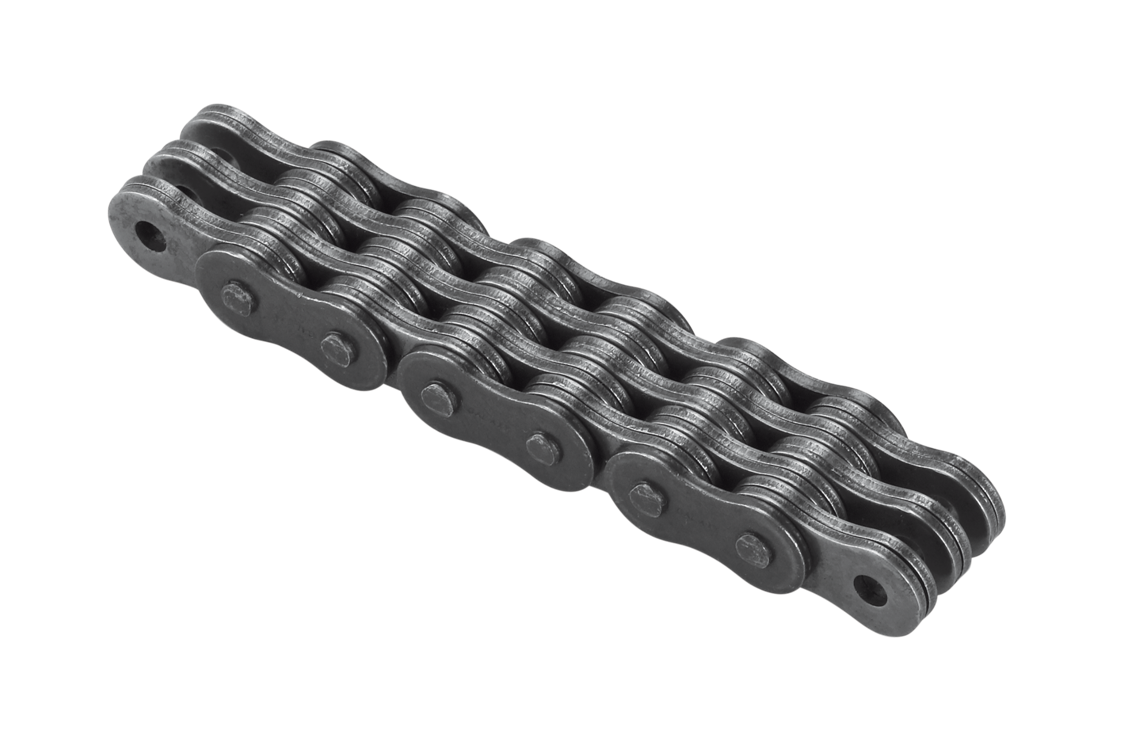
Leaf chains come in different types based on design and application:
The choice of type depends on the load capacity, lifting height, and operational speed requirements.
Leaf chains are widely used in industries where lifting and precise load handling are crucial. Typical applications include:
Leaf chains offer several advantages over other chain types:
It’s important to distinguish leaf chains from roller chains:
| Feature | Leaf Chain | Roller Chain |
|---|---|---|
| Load capacity | High | Moderate |
| Rollers | None | Present |
| Application | Lifting, hoisting | Power transmission |
| Elongation | Minimal | Higher under heavy load |
| Durability | High | Moderate |
While roller chains are ideal for driving machinery, leaf chains excel in lifting applications where safety and load handling are paramount.
1. What materials are leaf chains made of?
Leaf chains are usually made from high-strength carbon steel or alloy steel. Some may have corrosion-resistant coatings for outdoor or harsh environments.
2. How do I know which leaf chain to choose?
Consider factors like load capacity, lift height, operational speed, and environmental conditions. Manufacturer catalogs often provide load ratings and specifications.
3. Can leaf chains be replaced easily?
Yes, leaf chains are modular. They can be replaced without significant dismantling of the machinery, but it’s important to use the correct type and pitch for safety.
4. How do I maintain a leaf chain?
Regular lubrication and inspection for wear, cracks, or elongation are essential. Replace chains that show excessive wear to prevent accidents.
5. Are leaf chains suitable for outdoor use?
Yes, but it’s recommended to use chains with corrosion-resistant coatings in outdoor or humid environments.
Leaf chains may seem simple, but they are a backbone of many industrial lifting and conveying systems. Their high tensile strength, durability, and compact design make them indispensable for forklifts, hoists, conveyors, and more. Understanding the right type and proper maintenance ensures safety, reliability, and efficiency in industrial operations.
If you are looking for high-quality leaf chains for your machinery, it’s essential to consult manufacturers and select chains that meet your load and operational requirements.