Industrial chains are fundamental components in mechanical power transmission and material handling systems. Found in everything from manufacturing plants to agricultural machinery, these chains enable precise motion control and efficient load transfer. Understanding their design, structure, and applications is essential for engineers, maintenance teams, and industrial buyers seeking optimal performance and reliability.
A link chain is composed of interconnected metal loops, each welded to the next to create a continuous flexible line. The structure allows tension to be distributed evenly across the links, providing exceptional load-bearing strength.
The chain operates by transmitting tensile force between links. Its simplicity makes it reliable and easy to maintain in demanding environments.
Key Advantage: simple design, high tensile strength, and excellent resistance to shock loading.

The roller chain is the most widely used type for mechanical power transmission. It consists of inner and outer link plates, pins, bushings, and rollers. When engaged with a sprocket, the rollers rotate, minimizing friction and wear.
Power is transmitted through positive engagement between the chain and sprocket teeth. This ensures precise speed ratio control and efficient torque transfer.
Key Advantage: high efficiency, durability, and adaptability to different load conditions.

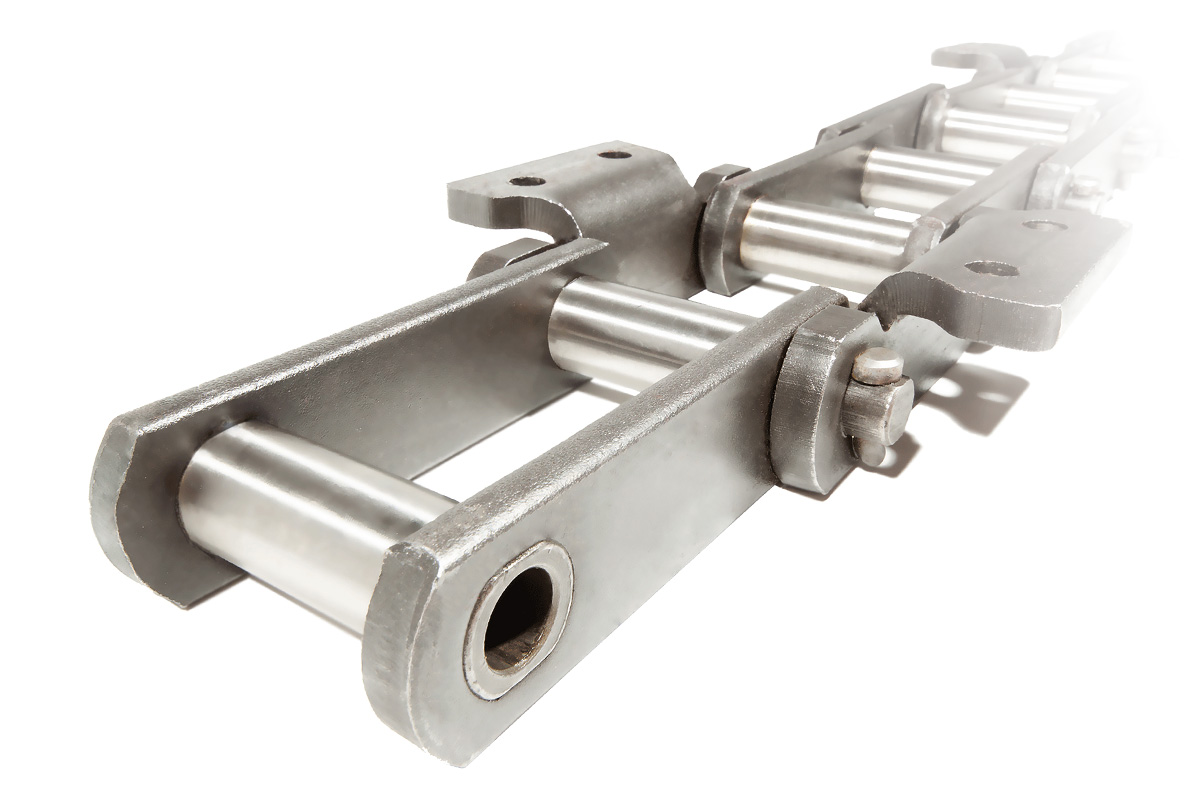
A conveyor chain is designed with attachments, extended pins, or carriers to move materials along a track or conveyor system. It is often customized based on the transported product and environmental conditions.
Instead of transferring torque, conveyor chains move loads horizontally or vertically along a guided path. The motion is driven by sprockets or shafts that pull the chain at a controlled speed.
Key Advantage: strong adaptability, continuous operation capability, and suitability for both clean and harsh environments.
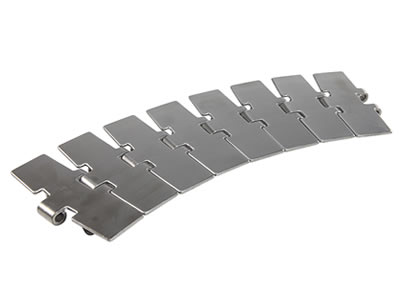
The flat top chain features interlocking plates with flat upper surfaces connected by hinge pins. These plates form a seamless, smooth conveying surface that allows goods to move directly on top of the chain.
The chain runs on guiding tracks or sprockets, ensuring stable, synchronized movement. The flat surface provides uniform support for items of various shapes and sizes.
Key Advantage: stable and hygienic conveying surface; available in stainless steel or plastic for different environments.
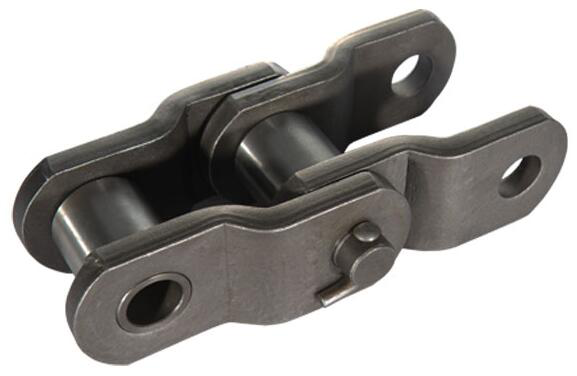
Heavy-duty chains are enhanced versions of roller or link chains, reinforced with thicker plates, larger pins, and heat-treated materials for maximum load capacity and fatigue resistance.
They operate under the same mechanical principle as standard roller chains but are engineered for higher torque and extreme conditions, ensuring reliable performance in heavy machinery.
Key Advantage: extreme load endurance, wear resistance, and long operational lifespan.
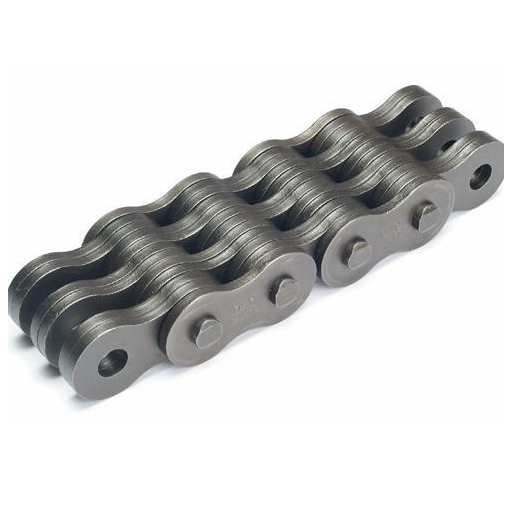
The leaf chain, also known as a forklift chain or lifting chain, is built from stacked link plates and pins, without rollers or bushings. The plates are interlaced in a specific pattern to create strong tensile strength while maintaining flexibility.
Unlike roller chains, leaf chains do not engage with sprocket teeth. Instead, they loop around sheaves or pulleys to lift or lower loads. The chain’s tension supports vertical movement, making it ideal for lifting applications.
Key Advantage: high tensile strength, compact design, and smooth lifting motion under heavy loads.
All industrial chains rely on mechanical linkage and tension transmission:
Proper lubrication, sprocket alignment, and material selection significantly affect chain performance and service life.
Choosing the correct industrial chain requires considering several factors:
Selecting the optimal chain improves system efficiency, reduces downtime, and extends equipment lifespan.
From link chains that lift heavy loads to roller chains powering machines and flat top chains conveying goods in production lines, industrial chains are indispensable in modern engineering.
A deep understanding of their design principles, mechanical operation, and specific applications helps industries achieve higher productivity, reliability, and energy efficiency.