Mining is one of the most demanding industrial environments on earth. From extreme abrasion to high-impact loading, every component used in mines—from conveyor systems to security equipment—must withstand constant stress. Among these components, heavy-duty welded steel chains are essential for both material handling and equipment protection. Their superior fatigue strength, wear resistance, and impact-resistant chain design make them ideal for harsh mining conditions.
In this guide, we explain why mining welded chains outperform standard chains, how their hardened steel links enhance durability, and why even high security anti-theft chains are vital for protecting high-value mining assets.
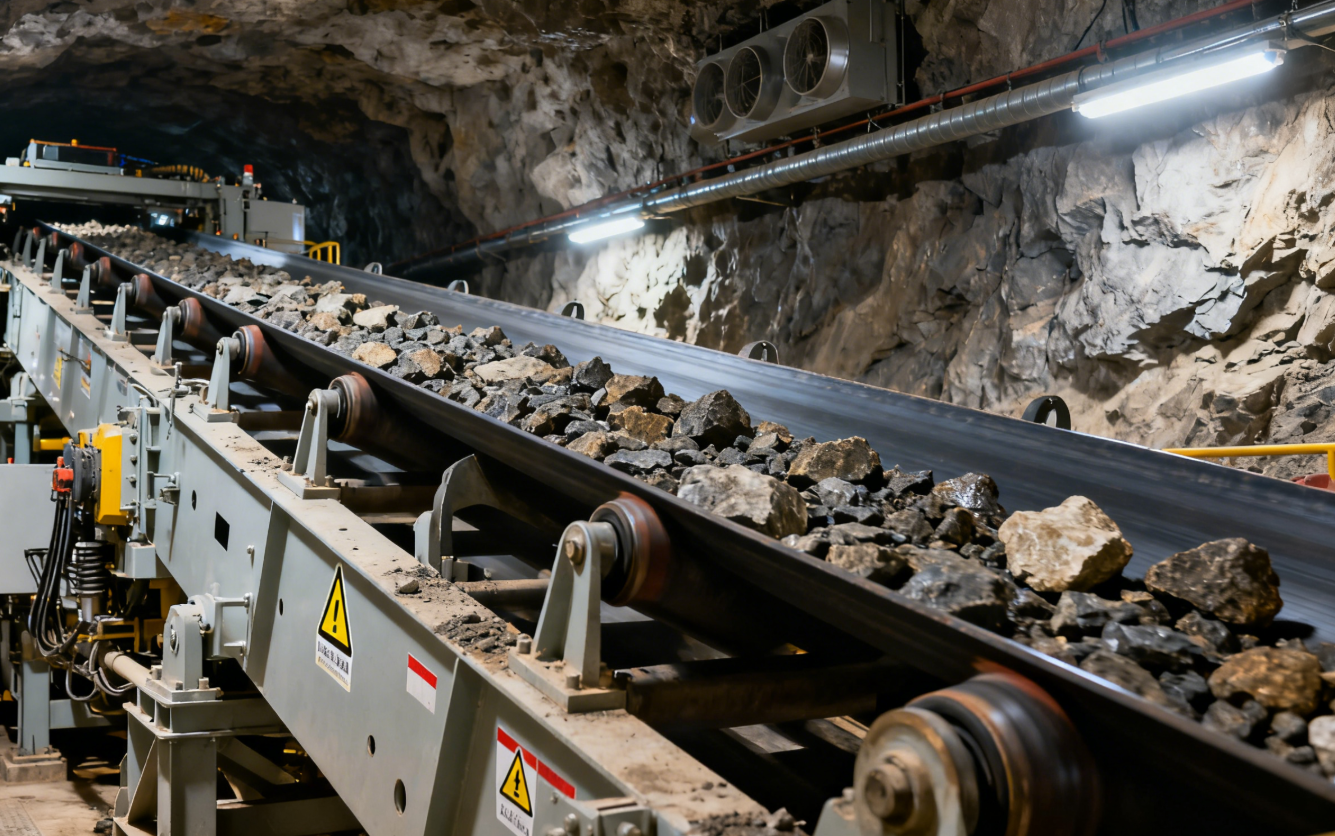
Mining environments expose conveyor components to abrasive materials such as ore, gravel, coal, and stone. Abrasion-resistant chains and impact-resistant conveyor chains are engineered with hardened steel and specially heat-treated surfaces to survive heavy-duty operation.
Mining conveyors run continuously. Abrasive minerals grind against chain surfaces, wearing down low-quality steel fast.
Welded steel chain construction helps solve this by offering:
Mining conveyors handle unpredictable loads, especially during ore dumping, chute transfer, and crusher feeding.
Heavy-duty welded chains are designed for high fatigue strength, meaning they resist cracking or failure even under continuous cyclic loading.
Mining welded chain is used in:
Their rugged design helps maintain operational reliability under high shock loads.
Mining companies protect millions of dollars’ worth of equipment.
High security chains, including cut-proof chains, are used to secure:
When combined with a security chain and lock, hardened steel links resist:
This is why many operations prefer anti-theft chain systems made from alloy-hardened, wear-resistant steel.
Welded steel chains are used for:
Because they are resistant chains, they do not deform easily—even under sudden impact.
| Feature | Welded Steel Chain | Standard Chain |
|---|---|---|
| Abrasion resistance | ★★★★★ | ★★★ |
| Impact resistance | ★★★★★ | ★★★ |
| Cut resistance | ★★★★☆ | ★★ |
| Fatigue strength | ★★★★★ | ★★★ |
| Link integrity | Excellent (welded joints) | Moderate |
| Best for mining? | Yes | No |
Welded steel chains maintain shape and functionality in harsh mining conditions, while standard chains deform, crack, or fail prematurely.
The following chain features enhance performance under heavy-duty stress:
Improves resistance against abrasion and cutting tools.
Provide superior dimensional stability.
Used for extreme load applications.
Increases hardness while maintaining core toughness.
Extend chain life in wet or chemically harsh environments.
Together, these design characteristics make heavy-duty security chains and mining welded chains last significantly longer than low-grade alternatives.
When selecting a conveyor chain or security chain for mining, consider:
Chains used in ore conveying may require greater fatigue strength, while chains used for security must be cut-proof and resistant to bolt cutters.
It is a chain made by welding individual steel links for maximum strength, durability, and integrity.
They offer high wear resistance, fatigue strength, and impact resistance, essential for ore, coal, and aggregate transport.
Yes. Welded chains outperform standard chains in harsh environments due to higher durability and structural integrity.
Many cut-proof and heavy-duty security chains are made with hardened alloy steel, making them extremely resistant to bolt cutters.
Yes. Their toughness, hardness, and cut resistance make them ideal for securing expensive mining equipment and facilities.