The pulp and paper industry relies heavily on efficient roll handling solutions to move large paper rolls safely and reliably through production lines. With the rise of fully automated facilities, the use of floor conveyor chains and automated roll handling chains has become critical for maintaining smooth operations, ensuring safety, and meeting working load limits.
In this guide, we explore how paper roll conveyor systems work, the role of heavy duty chains in modern roll handling systems, and why choosing the right industrial chains is vital for maximizing efficiency and minimizing downtime.
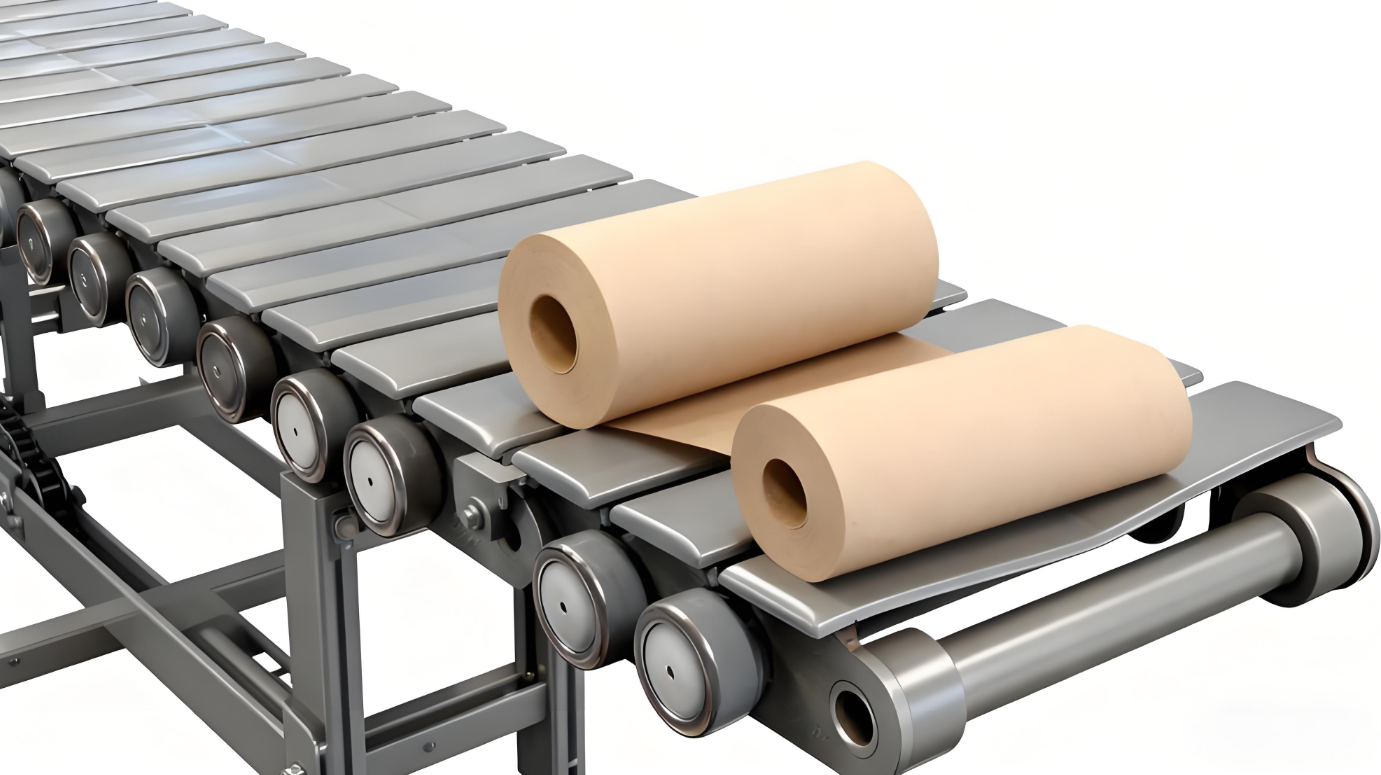
Floor conveyor chains are designed to move paper rolls and other materials along conveyor systems embedded in the production floor. These steel chains are engineered for heavy load industrial chain applications, providing stability and durability under continuous operation.
Key benefits include:
By using heavy duty chains and industrial chains, paper mills can efficiently handle integrated roll systems while maintaining high throughput and minimal downtime.
A paper roll conveyor system typically includes:
Embedded in the mill floor, these chains move paper rolls from storage to processing or packaging areas. Floor conveyor chains are specifically designed for heavy load and continuous operation.
These chains connect to fully automated handling equipment, allowing seamless transport and lifting of rolls without manual intervention.
Special lifting chains are used for vertical or inclined movement of rolls, integrated into roll handling systems for safe and precise handling.
The drive chain powers the conveyor system, transferring torque and ensuring synchronized movement of all chains across the production line.
Durable steel chains are preferred for their high strength, longevity, and ability to meet the grade of chain required for heavy loads.
Floor conveyor chains operate as part of an integrated roll handling system. Here’s how they function:
This system allows mills to handle rolls safely, efficiently, and without manual labor, supporting higher throughput and reducing the risk of product damage.
Using heavy duty chains in paper roll conveyor systems offers several advantages:
Floor conveyor chains move paper rolls along the production floor, while drive chains transmit power to drive the conveyor system, ensuring synchronized operation.
Yes. Lifting chains and automated roll handling chains are designed to meet working load limits, ensuring safe vertical or inclined movement.
Heavy duty chains, steel chains, and grade of chain specified for industrial chains applications are recommended for durability and reliability.
Absolutely. Modern floor conveyor chains are integrated into fully automated roll handling systems, providing precise control and minimal manual intervention.
Chains designed to meet working load limits reduce the risk of accidents and product damage, supporting safer handling of heavy paper rolls.
Floor conveyor chains and automated roll handling chains are the backbone of modern paper roll conveyor systems. By combining heavy duty chains, steel chains, and industrial chains, mills can move paper rolls safely and efficiently along the production line. From lifting chains to drive chains, every component of the roll handling system ensures reliable transport, compliance with working load limits, and integration into fully automated operations.
Investing in high-quality conveyor chains and roll handling solutions not only improves throughput but also enhances safety, durability, and efficiency in the pulp and paper industry.